
Headliners’ Presentation Slides & Recordings:
Dr. Toshiyuki Yamamoto – Nagoya University (Slides and Recording)
CHICKEN OR EGG: FUEL-CELL-VEHICLE OWNERSHIP vs. ACCEPTANCE OF HYDROGEN FUELING STATIONS
Dr. Geetam Tiwari – Indian Institute of Technology Delhi (Slides and Recording)
CHALLENGES OF MEETING GLOBAL TARGETS FOR FEWER ROADWAY FATALITIES
Dr. Susan Handy – University of California, Davis (Slides and Recording)
SHIFTING GEARS: CAN RESEARCH CHANGE PROFESSIONAL THINKING?
Dr. Francisco Camara Pereira – DTU (Slides and Recording)
SCALABILITY AND GENERALISATION OF TRANSPORT MODELING AND SIMULATION WITH AI
More detailed information on our headliners can be found below.
EASTERN HEMISPHERE
DAY 1 Eastern: Wednesday, August 7
Session 1: Transportation of the Future & Embracing Sustainability Recording
Session 2: Innovative & Eco-Friendly Transportation Systems Recording
Session 3: Intelligent Transportation Systems, Analysis & Technology Recording
DAY 2 Eastern: Thursday, August 8
Session 4 : Active Transportation & Transit Recording
Session 5: Recent Advance in Modelling & Analysis of Transport Dynamics (Special Session) Recording
Session 6: Mobility Advancements Recording
WESTERN HEMISPHERE
DAY 1 Western: Wednesday, August 7
Session 1: Safety & Control in Transportation Recordings
Session 2: Electric Vehicles Adoption & Planning Recording
Session 3: Autonomous Vehicles & Transportation Infrastructure Recording
Session 4: Climate Damage from Aviation & Pricing & Non-Pricing Approaches to Mitigate Damage (Special Session) Recording
Session 5: Active Transportation & Transit Recording
Session 6: Travel Demand & Transportation Choices Recording
Session 7: Transportation Planning & Policy Recording
DAY 2 Western: Thursday, August 8
Session 8: Equity & Accessibility in Transportation Recording
Session 9: Transportation of the Future & Embracing Sustainability Recording
Session 10: Intelligent Transportation Systems, Analysis & Technology Recording
Session 11: Advancing Open Science (Special Session) Recording
Session 12: Future Mobility Landscape & Data Recording
Session 13: User Choices & Mobility Recording
Session 14: Infrastructure & Policy Recording
Note: All BTR#6 recordings are also now available via billibilli, for easier viewing/watching from China – please click here. Enjoy!!
BTR 6 Headliners
Please join us each each day as we kick off BTR sessions with…
United States’ Susan Handy, Denmark’s Francisco Camara Pereira,
Japan’s Toshiyuki Yamamoto, + India’s Geetam Tiwari.
EASTERN track: Wednesday, August 7 at 10:00 CST / 11:00 JST / 12:00 AEST / 02:00 UTC
CHICKEN OR EGG: FUEL-CELL-VEHICLE OWNERSHIP vs. ACCEPTANCE OF HYDROGEN FUELING STATIONS

BIO: Toshiyuki Yamamoto is Professor in Civil Engineering & Sustainable Systems at Japan’s Nagoya University. His PhD is from Kyoto University in 2000, with work on household vehicle ownership and use; and he has worked at INRETS (now IFSTTAR) in France and the University of Washington as a visiting scholar. His research interests include next-gen mobility, activity-travel behavior, and traffic safety. And he is leading a project on cost-reduction of hybrid renewable energies powered by hydrogen stations. He serves as Associate Editor for Transportation, and is a member of TRB’s Traveler Behavior & Values Committee and the International Conference on Transport Survey Method’s steering committee.
ABSTRACT: Hydrogen is touted as a clean alternative to fossil fuels in Japan. As the first country to to seek to make hydrogen a major source of power, Japan needs to investigate consumers’ attitudes toward H2. Sales of hydrogen fuel-cell vehicles (HFCVs) remain small compared to expectations or plans. This seminar will start with a focus on consumer preferences toward HFCVs (including the investigation of the socioeconomic profiles of 500 potential car buyers, stated preferences for HFCVs under various hypothetical vehicle attributes and policy incentives, the long-term intentions of 89 early adopters). A key finding is that approximately 50% of the private HFCV early adopters expect to end their HFCV ownership, with few H2 refueling stations serving as a significant factor. The second half is on public acceptance to hydrogen fueling stations (HFS), across Japan, Spain, and Norway. Five categories of explanatory variables (awareness levels of H2 energy, HFS site design details, residential characteristics, car ownership and use, and demographics) are used to predict acceptance. The results suggest polarizing effects – like awareness of hydrogen-related accidents, the presence of risk information and safety measures, and availability of green-H2 supply, indicating potential pathways to promote public acceptance.
EASTERN track: Thursday, August 8, at 10:00 CST / 11:00 JST / 12:00 AEST / 02:00 UTC
CHALLENGES OF MEETING GLOBAL TARGETS FOR FEWER ROADWAY FATALITIES
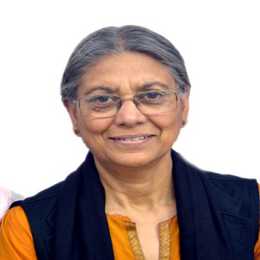
BIO: Geetam Tiwari is Professor Emeritus at the Indian Institute of Technology Delhi, and was Head of IIT Delhi’s ‘s Transportation Research and Injury Prevention (TRIP) Centre from 2021-2023. She has MS and PhD degrees from the University of Illinois at Chicago, and her work focuses on traffic and transport planning, for pedestrians, bicycles and bus systems. She has worked with India’s city, state and national governments on various public transport and road safety projects, and lead the Bureau of Indian Standards committee on transport services. She is a member of Indian Roads Congress committee for safety standards, and Editor-in-chief of the International Journal of Injury Control and Safety Promotion since 2009. She has served on the Board of India’s Urban Mass Transit Company and NIT Hamirpur for many years, and currently serves on the Board of the International Association for Traffic Safety Science (IATSS), LEAD India, and Delhi’s Integrated Multimodal Transport System Company (IMTSC). She is recipient of many national and international awards, including an honorary doctorate at Sweden’s Chalmers University.
ABSTRACT: The World Health Organization’s (WHO’s) 2023 Global Status Report on Road Safety shows global traffic deaths to have fallen slightly: to 1.19 million per year: https://www.who.int/teams/social-determinants-of-health/safety-and-mobility/global-status-report-on-road-safety-2023. However, traffic injuries continue to be the leading cause of death for children and young adults aged 5–29 years around the globe. And 92% of the world’s roadway fatalities occur in low- and middle-income countries. Stunningly, more than half of all traffic deaths are among vulnerable road users, including pedestrians, cyclists and motorcyclists. Ten nations, mostly in Europe, met the target of reducing deaths by 50%, while 66 others reported increases. Most of those are in Africa and South East Asia, where traffic patterns are dominated by pedestrians, motorised two-wheelers, and other, informal modes. The current speed and scale of known safety treatment implementation (like sidewalks, medians, and improved enforcement) is proving insufficient to meet global safety-improvement targets. Researchers from all regions are invited to tackle the major challenge of lowering crash counts and severities everywhere, by generating new evidence-based interventions, especially for vulnerable roadway users.
WESTERN track: Wednesday, August 7, 2024 at 10:00 CDT / 11:00 EDT / 17:00 CEST / 15:00 UTCSHIFTING GEARS: CAN RESEARCH CHANGE PROFESSIONAL THINKING?

BIO: Susan Handy is a Distinguished Professor of Environmental Science and Policy and Director of the National Center for Sustainable Transportation at the University of California, Davis, where she also chairs the graduate program in Transportation Technology and Policy. Her research focuses on strategies for reducing automobile dependence, including bicycling as a mode of transportation. She is the author of Shifting Gears, published by MIT Press.
ABSTRACT: It is not hard to find examples in which research has informed transportation policy and practice. But does research also influence how transportation professionals think? I start by discussing why ideas are important to the profession and what role research can play in shaping them. I then present three examples of core ideas in the transportation profession that have shifted to a lesser or greater degree, while considering the role of research, including my own, in these shifts: mobility versus accessibility, capacity expansion versus demand management, and hierarchy versus connectivity. These examples illustrate a few of the ways that core ideas within the transportation profession have shifted over time and the role of different kinds of research in supporting, encouraging, and documenting those shifts.
WESTERN track: Thursday, August 8, 10:00 CDT / 11:00 EDT / 17:00 CEST / 15:00 UTC
SCALABILITY AND GENERALISATION OF TRANSPORT MODELING AND SIMULATION WITH AI

BIO: Francisco Camara Pereira is Professor at DTU, where he leads the Intelligent Transport Systems group. His research is about the methodological combination of Machine Learning and Transport Research, to address challenges such as demand modeling, traffic prediction, data collection, simulation metamodeling, or anomaly detection. He has been Marie Curie fellow for two times (2011 and 2016) and is currently a Novo Nordisk Data Science Distinguished Investigator. He has published over 70 articles in both Machine Learning and Transport Research. Before joining DTU, he was Senior Research Scientist with SMART/MIT (2011-2015) and Assistant professor in the University of Coimbra (2005- 2015).
ABSTRACT: Large-scale transport simulation models face the critical challenge of computational complexity. This complexity significantly hampers calibration and model exploration, such as scenario discovery, due to the extensive time required for each simulation run. Traditionally, two approaches have been employed to mitigate this issue: model simplification through spatial and/or temporal aggregation and scope reduction by focusing on specific segments of the transport network or population subsets. Alternatively, analytical or statistical model approximations, known as metamodels, have been utilized. Recently, Machine Learning (ML)-based metamodels have gained popularity for their potential to streamline simulations. However, these models often struggle with out-of-distribution scenarios, failing to accurately represent the original simulation under new conditions, such as policy interventions. This headline presentation will introduce recent advancements in causal metamodeling, an approach that integrates ML-based metamodeling with domain-specific knowledge to produce simulation approximations that not only remain true to the original model but also operate with significantly enhanced speed. Drawing on the recent and ongoing research, I will outline the foundational concepts, share preliminary findings, and explore the challenges and opportunities this research presents. Through causal metamodeling, we aim to significantly improve the scalability and generalization capabilities of simulation models, opening new avenues for comprehensive and efficient scenario analysis and policy advisory.
 BTR Conference Home