
Headliners’ Presentation Slides & Recordings:
Dr. David Levinson – University of Sydney (Slides and Recording)
A Web of Nets: Integrating Network Theory, Resilience, Safety, and Access in Transport Systems
Dr. Yiqiu Tan – Harbin Institute of Technology (Recording)
Prevention & Resilience Enhancement of Snow-Ice Disaster in Road Infrastructure
Dr. Moshe Ben-Akiva — Massachusetts Institute of Technology (Slides and Recording)
Discrete Choice Enhanced with Machine Learning Capabilities
Dr. Marianne Hatzopoulou – University of Toronto (Slides and Recording)
Beyond GHG: The challenge of achieving environmental justice through transport decarbonization
More detailed information on our headliners can be found below.
Best Paper Awards
Eastern Track Best Paper Award
A Simultaneous Approach for Solving the Bus Network Design, Express Service Design & Frequency-setting Problem
Authors: QIANDE HE* & WAI YUEN SZETO (The University of Hong Kong) + YI WANG (University of Canterbury)
Eastern Track Best Paper Award
The Incentive Bundle Program to Enhance Multimodal Transportation
Authors: Jason Lu* & Neda Masoud (University of Michigan)
Best Paper Award

Multi-Scale Land Use Impacts on Fossil Fuel-Related CO2 Emissions in the United States
Authors: Jason Hawkins* & Mehrnoosh Zare (University of Calgary)
Western Track Honorary Mention
Coordinating Competing Electric Vehicle Fleets: An Agent-Based Charging Capacity Market
Authors: Lennard Sund*, Janik Muires & Ramin Ahadi (University of Cologne), Konstantina Valogianni (IE Madrid), & Wolf Ketter (University of Cologne)
Western Track Honorary Mention
Flexibility or Forced? Exploring the Cognitive Burdens of Multimodal Commuting
Authors: Adeeba Naz (Bangladesh University of Engineering and Technology)*; Shaikh Fardin Ahammed (Bangladesh University of Engineering and Technology); Sk. Md. Mashrur (Bangladesh University of Engineering and Technology)
EASTERN HEMISPHERE
DAY 1 Eastern: Wednesday, August 6
Session 1: Ridehailing, Ridesharing, & Driver Behavior (Recording)
Session 2: Mobility Patterns, Travel Behavior, & Preferences (Recording)
Session 3: Intelligent Transportation Systems (Recording)
Session 4: Shared Mobility & Micromobility Systems (Recording)
Session 5: Transit Systems (Recording)
Session 6: Safety & Risk Analysis (Recording)
DAY 2 Eastern: Thursday, August 7
Session 7 : Sustainable Transportation Systems (Recording)
Session 8: Freight & Logistics Optimization (Recording)
Session 9: Sustainable Transport, Equity, & Policy Evaluation (Recording)
Session 10 (Special Session): IATBR: Bridging Borders: Global Cross-Country Insights on Travel Behaviour (Recording)
WESTERN HEMISPHERE
DAY 1 Western: Wednesday, August 6
Session 1: Transportation Electrification & Grid Integration (Recording)
Session 2: Active & Micromobility Modes (Recording)
Session 3: Equity, Accessibility, & Disadvantaged Populations (Recording)
Session 4: Safety, Risk, & Crash Analysis (Recording)
Session 5: Gender, Age, & Vulnerable Travelers (Recording)
Session 6: Electric Vehicle Use & Behavior (Recording)
Session 7: Travel Behavior, Mode Choice, & Mobility Trends (Recording)
Session 8: Emergency Preparedness & Disruption Response (Recording)
Session 9 (Special Session): Managed Lanes (Recording)
DAY 2 Western: Thursday, August 7
Session 10 (Special Session): Traffic Flow with AVs (Recording)
Session 11: Public Transit Operations & Perceptions (Recording)
Session 12: Emerging Technologies in Mobility (Recording)
Session 13: Transportation Data & Analytical Methods (Recording)
Session 14: Urban Modeling, Simulation, & Optimization (Recording)
Session 15: Built Environment & Urban Mobility Patterns (Recording)
Session 16: Transportation Equity, Resilience, & Sustainability (Recording)
Session 17: Fare Policy, & Shared Mobility (Recording)
Session 18 (Special Session): Crash Rates for Human Drivers vs. ADS (Recording)
BTR 7 Headliners
EASTERN track: Wednesday, August 6 at 10:00 CST / 11:00 JST / 12:00 AEST / 02:00 UTC
A Web of Nets: Integrating Network Theory, Resilience, Safety, and Access in Transport Systems
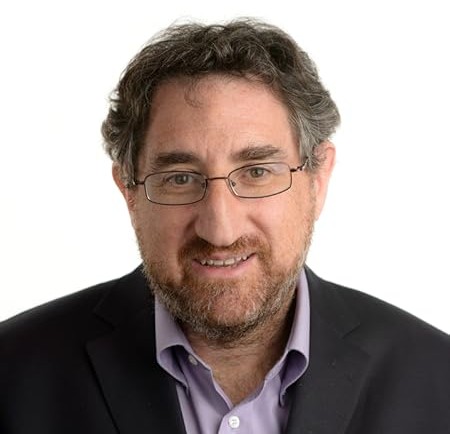
BIO: David Levinson is a professor in University of Sydney‘s School of Civil Engineering,where he leads TransportLab & the Transport Engineering research group. He is also an honorary affiliate of U Sydney’s Institute of Transport & Logistics Studies. He received his PhD in Transportation Engineering from University of California, Berkeley.
His research spans transport engineering, planning, policy, & economics, with a focus on land use-transport interactions, accessibility, & network evolution. He has published over 300 papers & multiple books, & has made influential contributions to accessibility theory & transport system dynamics.
ABSTRACT: This talk examines modern transport systems as interconnected networks, where every element contributes to a complex, evolving web. Building on concepts from network theory, graph analysis, and systems dynamics, the presentation synthesises ideas from resilience, accessibility, and scaling theories to offer a fresh
perspective on transport system design. We explore how factors such as connectivity, centrality, and feedback loops shape network efficiency and adaptability, with practical examples drawn from urban and regional contexts. Analytical methods and data-driven models reveal the mechanisms behind transport network evolution. By applying these frameworks, we can develop robust transport systems that can better respond to changing conditions and emerging challenges.
EASTERN track: Thursday, August 7, at 10:00 CST / 11:00 JST / 12:00 AEST / 02:00 UTC
Prevention & Resilience Enhancement of Snow-Ice Disaster in Road Infrastructure

BIO: Yiqiu Tan is President of Harbin Institute of Technology’s (HIT’s) Weihai campus in northeastern China, & Executive Deputy Director of the Transport Industry’s Key Laboratory. She earned her PhD in Road & Railway Engineering from Harbin University (now part of HIT).
Her work focuses on pavement materials & structures in cold climates, including anti-icing, skid resistance, & green-asphalt technologies. She has published over 200 papers & holds 47 patents. Her research outcomes have been applied in major national projects, including Chang’an Avenue & Beijing Daxing International Airport. She is a recipient of top national awards & the National Science Fund for Distinguished Young Scholars.
ABSTRACT: This talk focuses on the synergistic enhancement of road snow-ice disaster prevention and transportation system resilience. By integrating targeted pavement material design, innovative road structural optimization, and risk management
theory for road operations, we have developed a “construction-maintenance dual- driven” technological framework for snow-ice disaster resilience enhancement. This approach provides novel insights for proactive infrastructure protection under extreme climate conditions. Through empirical studies in cold regions, we examine
the effectiveness of these multidimensional optimization strategies in improving road network safety and transport efficiency under winter conditions. Our research has demonstrated significant mitigation of winter traffic accident risks, concurrently delivering essential support for sustaining unimpeded regional economic operations.
WESTERN track: Wednesday, August 6, at 10:00 CDT / 11:00 EDT / 17:00 CEST / 15:00 UTCDiscrete Choice Enhanced with Machine Learning Capabilities

BIO: Moshe Ben-Akiva is the Edmund K. Turner Professor of Civil & Environmental Engineering at MIT, Director of the Intelligent Transportation Systems Lab, & lead investigator for Singapore-MIT Alliance for Research & Technology. A member of the U.S. National Academy of Engineering, he earned his PhD in Transportation Systems from MIT.
His research focuses on travel behavior, discrete choice modeling, & intelligent transportation systems. He co-authored Discrete Choice Analysis, developed the DynaMIT simulator, & has published nearly 400 papers. He has received numerous honors, including the Robert Herman Award & IATBR Lifetime Achievement Award.
ABSTRACT: This lecture introduces a novel framework for integrating data-driven flexibility into the specification and selection in Discrete Choice Analysis (DCA) models. Traditional DCA often relies on restrictive and sometimes arbitrary specification assumptions, which undermine credibility and overstate predictive certainty.
Building on well-established DCA models, such as multivariate extreme value and logit mixture models, our framework relaxes functional and distributional assumptions while explicitly incorporating behavioral theory constraints (e.g. sign, regularity, shape). These constraints preserve interpretability and trust, ensuring the resulting models remain consistent with foundational economic and behavioral principles. This expanded scope of inference enhances predictive accuracy and overall model credibility. Hypothesis tests are
developed to validate the consistency of the imposed constraints with observed data.
The added flexibility comes at the expense of increased complexity, both computational and algorithmic. Specialized solutions are developed for each application of the framework. Ongoing research focuses on scalable and generalized algorithms for broader applications.
This framework well-positions DCA to realize synergies between the data-driven and theory-based paradigms.
WESTERN track: Thursday, August 7, 10:00 CDT / 11:00 EDT / 17:00 CEST / 15:00 UTC
Beyond GHG: The challenge of achieving environmental justice through transport decarbonization

BIO: Marianne Hatzopoulou is Chair’s the University of Toronto’s Department of Civil & Mineral Engineering, & Canada’s Tier 1 Research Chair in Transport Decarbonization & Air Quality. She leads the TRAQ research group & the Positive Zero Transport Futures lab. She earned her PhD in Engineering from the University of Toronto.
Her research links transportation with air quality, climate change, & public health. With over 150 publications, she has received numerous awards, including the NSERC Brockhouse Prize & the University of Toronto Mid-Career Achievement Award. She has been chairing TRB’s Committee on Air Quality & GHG Mitigation.
ABSTRACT: Due to socioeconomic shifts and the need to achieve deep cuts in greenhouse gas (GHG) emissions, metropolitan areas around the globe are experiencing unprecedented transformation in their transportation infrastructure. The implications of such changes on the movement of people and goods are not well-characterized, hindering our ability to direct them towards maximum climate benefits while minimizing societal costs.
This talk puts particular emphasis on the transport infrastructure investments that can achieve the highest reductions in GHG emissions, while improving air quality, public health, and enabling sustainable thriving communities. What are the equity and justice implications of climate change mitigation action? And how do ensure that new transportation technologies and a low-carbon energy grid will create equitable benefits across communities?
 BTR Conference Home